

Sialkot, Pakistan produces around 70% of the world’s hand-stitched footballs, exporting roughly 40 million a year to brands like Adidas, Nike, and Puma. Local firm Forward Sports has made the official FIFA World Cup match ball for four consecutive tournaments (2014-2026). The industry earns Pakistan hundreds of millions in exports annually.
- Sialkot, Pakistan produces ~70% of the world’s hand-stitched footballs — roughly 40 million exported yearly.
- Local firm Forward Sports made the official FIFA World Cup match ball for four consecutive tournaments (2014, 2018, 2022, 2026).
- The industry earns Pakistan serious money: $221.8 million from football exports in just 10 months of FY2025-26.
- It’s a masterclass in industrial clusters, craftsmanship, and export entrepreneurship — built over a century.
- It faces real challenges: cheap competition, the need to modernize, and worker-welfare questions — but the opportunity is huge.
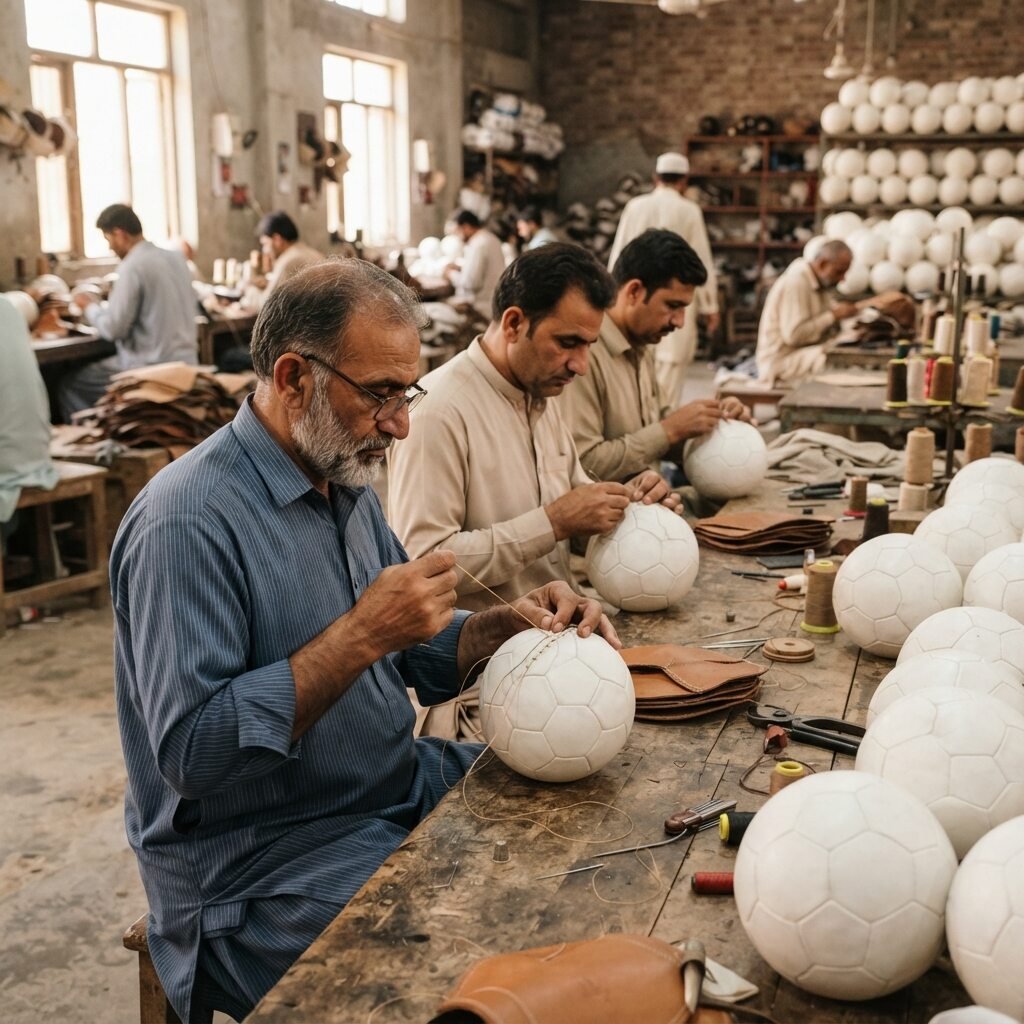
Here’s a fact that surprises almost everyone, including many Pakistanis. At the 2026 FIFA World Cup, when a striker curls a shot into the top corner or a goalkeeper makes a diving save, the ball at the center of that moment was made in Pakistan. Specifically, in Sialkot, a city in Punjab that quietly produces most of the world’s footballs, and has made the official World Cup ball for four tournaments running.
Despite Pakistan’s national team never qualifying for a World Cup, the country has been present on the pitch of nearly every World Cup for over four decades, through its footballs. It’s a genuinely inspiring story, and, more than that, a fascinating business case study in how a Pakistani city built a world-dominating industry. Here’s how Sialkot did it, the real economics behind it, the lessons for entrepreneurs, and the challenges ahead.

If you picked up a hand-stitched football anywhere in the world, at a school in Texas, a club in Germany, a street game in Brazil, there’s a better-than-even chance it was made in Sialkot. The city supplies the biggest names in sport: Adidas, Nike, Puma, and Decathlon all source footballs from Sialkot manufacturers. And most prestigiously, Sialkot has produced the official FIFA World Cup match ball since 1982, making it the manufacturing home of the tournament’s ball for more than four decades. For a single city in Pakistan to dominate a global product this completely is a remarkable, and underappreciated, achievement. It’s often called, fittingly, “the football factory of the world.”